Basement Flooding in Whiteland, IN
When basement water in Whiteland spreads overnight, Whiteland Water Restoration answers the phone at any hour.
Whiteland Water Restoration handles Basement Flooding for Whiteland, IN homeowners: emergency dispatch around the clock, IICRC certified technicians, and insurance coordination on approved claims. Call (463) 223-3831.
- Service: Basement Flooding for Whiteland homeowners
- Service area: Whiteland, IN and surrounding areas
- Response time: Around the clock dispatch; Whiteland emergencies move to the front of the line
- Licensed and insured (License #RC21100059)
- Serving Whiteland, IN since 2018
Basement Flooding Cleanup in Whiteland
We handle basement flooding cleanup throughout Whiteland, from standing water on the slab to drywall that's wicking it up.
Where the Water Comes From
Many basements here depend on a sump pump to stay dry, so a pump that quits during a storm can flood the space fast. In heavy storms, sewer water can also back up through floor drains, and that turns the job into sewage cleanup.
Our crews work all over Whiteland, from Millstone to the streets near Whiteland Community High School and Whiteland Elementary School. We also clean up flooded basements in Bargersville, Greenwood, New Whiteland and Trafalgar.
Expert Basement Flooding for Whiteland Homeowners
If you're going to file a claim on a wet basement in Whiteland, the documentation starts before the water leaves the floor. Photos of the standing water, the entry point, every affected room and the contents on the slab all matter to a carrier, and so do the moisture readings taken that first day. Whiteland Water Restoration dispatches within two hours and builds that file while extraction runs, then hands you a copy of it.
Part of working out why your basement flooded happens outside. The crew walks the exterior of your Whiteland home to look at the grade, the downspout outlets, the window wells and where the sump line discharges. Photos of those spots go in the file, so the right contractor knows what to look at.
Framing and subfloor readings drive the Whiteland Water Restoration schedule on a basement. A bottom plate sitting on wet concrete reads high long after the surface feels dry, and it won't give that water up quickly. Particleboard underlayment swells and comes apart where plywood usually survives. Crews take moisture content readings inside the wood as well as at the surface, and the drying goal comes from unaffected wood of the same species in the same house.
Check your policy for water backup and sump overflow coverage, and look at the limit listed next to it. Finished basements can cost more to put back than people expect, so it helps to know what your policy says early. Whiteland Water Restoration documents the loss in your Whiteland basement completely and walks you through it, and the coverage decision stays with your insurance company.
A wet finished basement in Whiteland is a scope that's growing while you think about it. Call Whiteland Water Restoration and a crew dispatches to extract, measure, and show you which materials can dry in place. The readings and photos are yours whether you file a claim or pay for the work yourself.
Signs You Need Basement Flooding Cleanup
If you notice any of these in your Whiteland home, schedule a free inspection before the issue worsens.
A musty, earthy smell that hits you as soon as you open the door at the top of the stairs
Water rising around the floor drain cover, or the drain taking laundry water slowly
Water dripping through the basement ceiling below the first floor laundry room or bathroom
A crack in the slab or the wall that stays wet when everything around it has dried
Vinyl plank or tile edges curling where the adhesive has released from the slab
Water pooled around the washer in your Whiteland basement after a hose split or a standpipe overflow
Batt insulation sagging out of the stud bays, darker and heavier along the bottom edge
Paint blistering and peeling off the lower foundation wall of your Whiteland basement in sheets
Water seeping under the door at the bottom of a walkout or exterior basement stairwell
Leaves and soil packed into your Whiteland window well, with a drain that no longer empties
How Whiteland Water Restoration Handles Basement Flooding
We follow these steps in order on every Whiteland job.
First Call and Triage
You describe where the water is and how deep it looks. The crew asks whether the power is on at your Whiteland home, then tells you what's safe to do while you wait, like shutting off a water supply.
Surface Cleaning
Once removal is done, the crew cleans the slab and the framing that stay in your Whiteland basement. Air scrubbers run during the work, and the surfaces are ready for the drying equipment before it goes in.
Wall Cavity Drying
Small holes behind the baseboard let conditioned air flow into the stud bays of a finished wall in your Whiteland home. That pulls moisture off the back of the drywall and out of the framing, so more of the wall can stay in place.
Upstairs Moisture Check
The crew closes off the stairway and reads the first floor walls above the basement of your Whiteland home, along with the underside of the floor. Those readings show whether humidity moved up and keep the drying confined to the basement.
Daily Monitoring
A technician returns every 24 hours while drying runs, takes readings at the same marked spots, compares room humidity against the day before, and moves equipment as the wet area shrinks. Any change to the scope arrives with photos and a conversation.
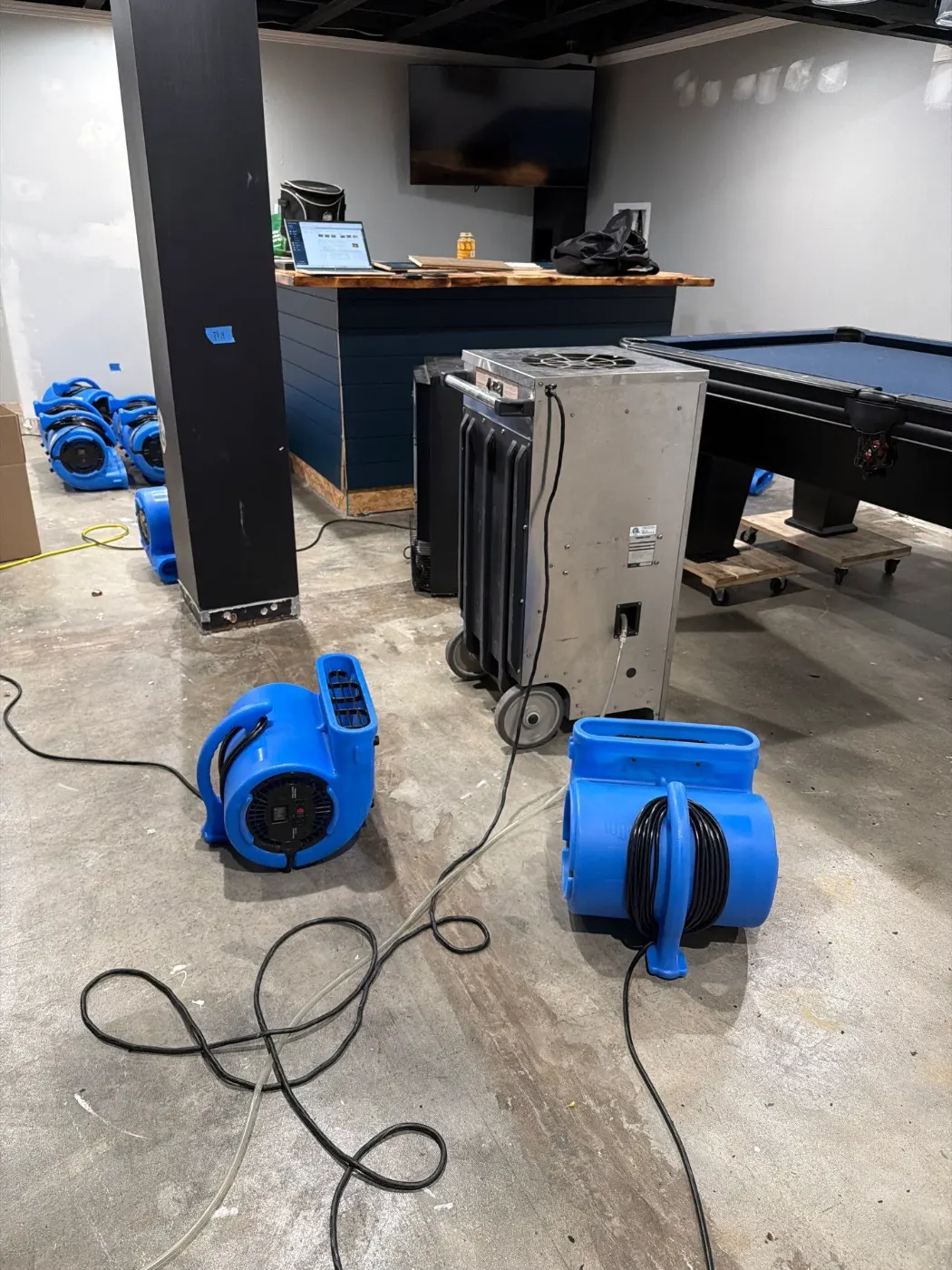
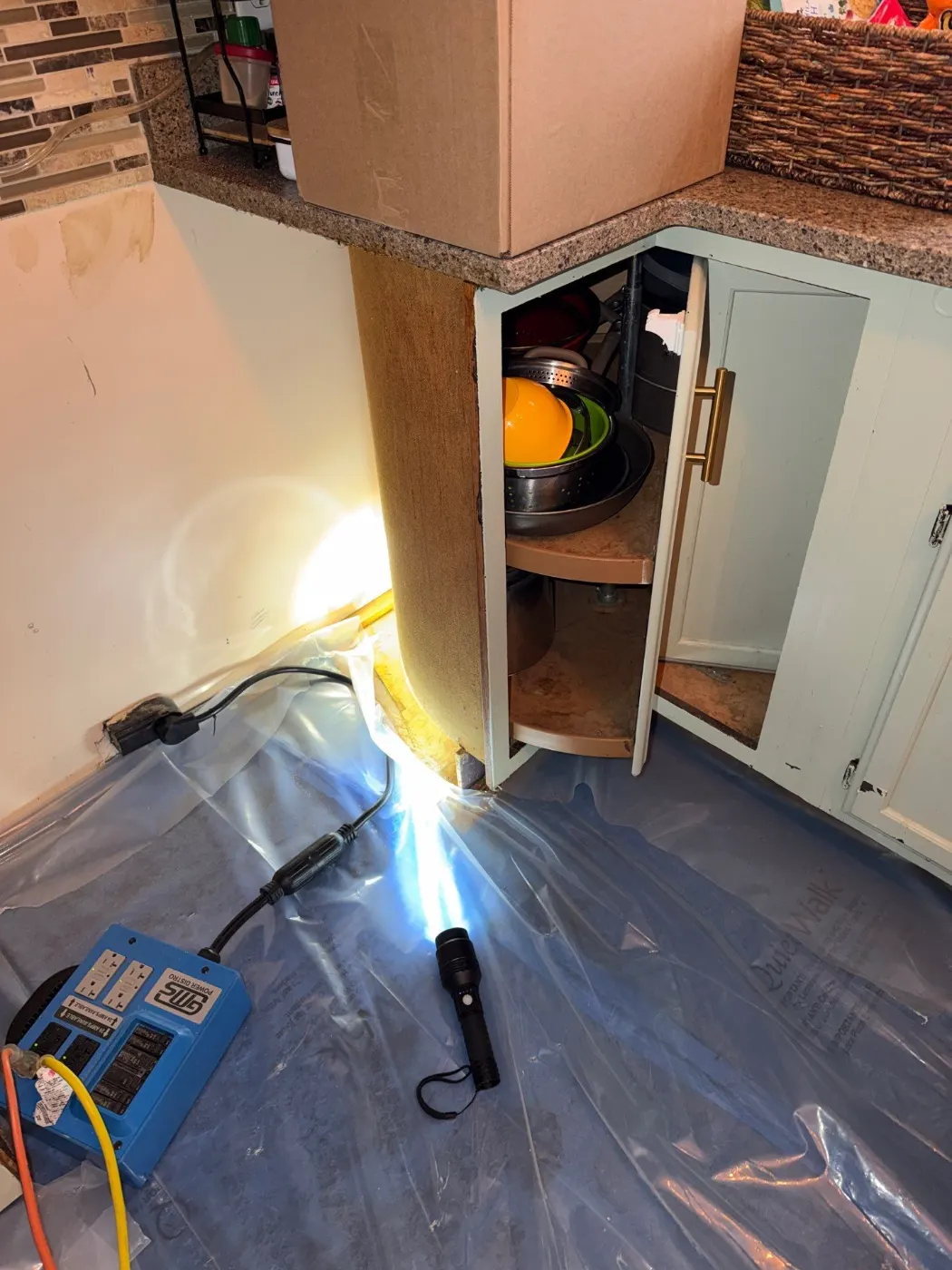
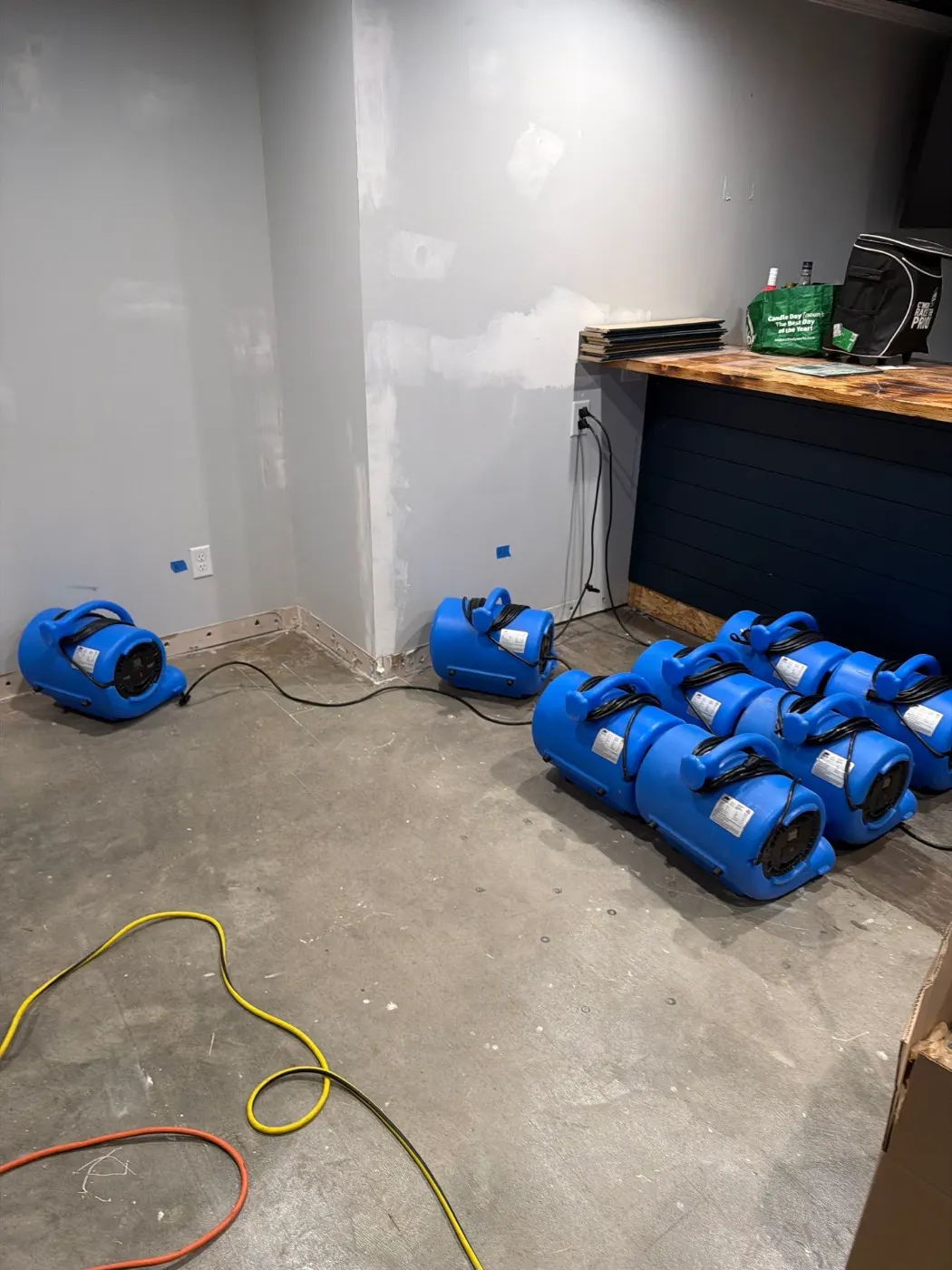
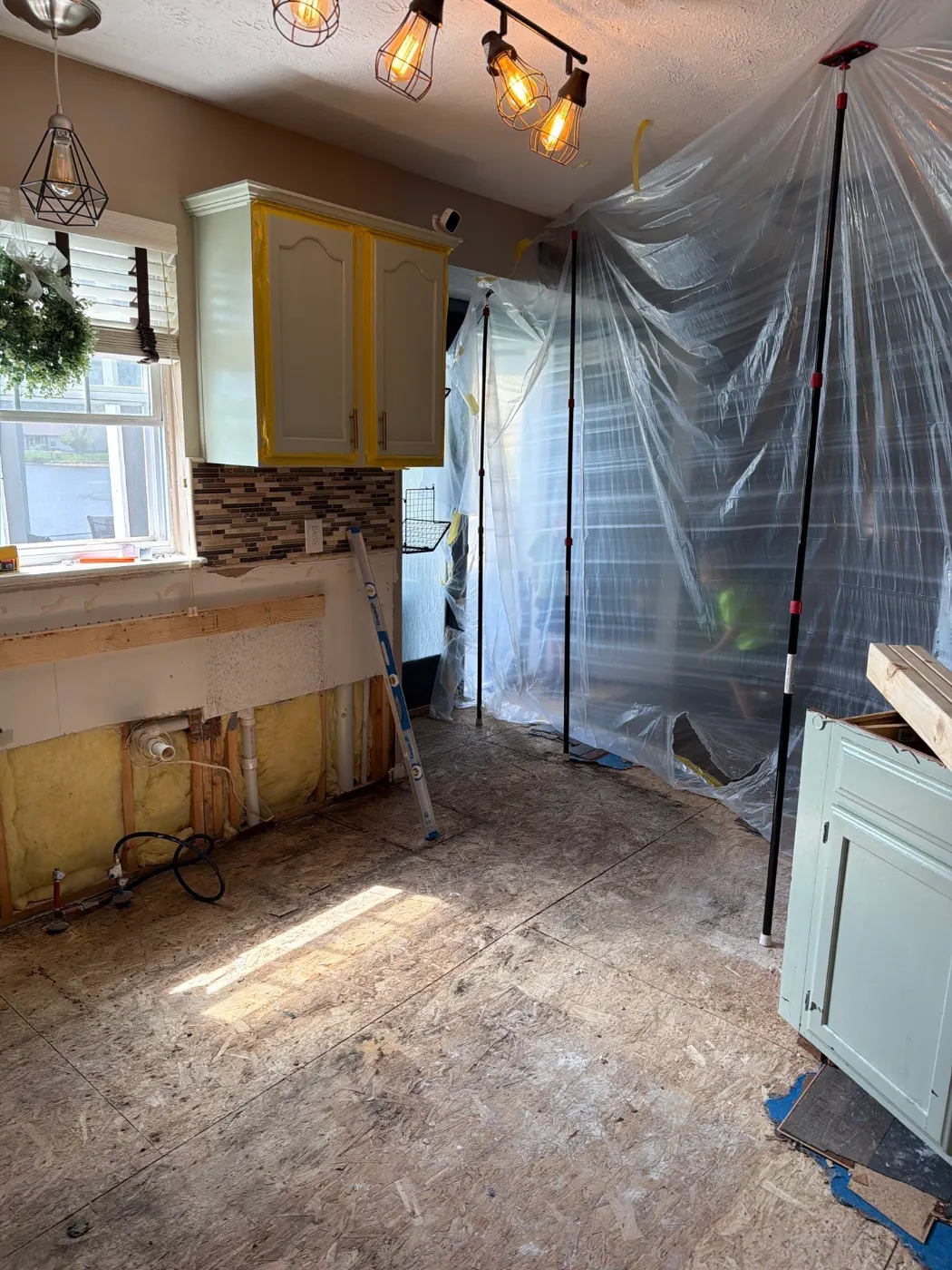
Basement Flooding in Whiteland
Photographs from real basement flooding jobs completed by our crew in Whiteland and surrounding areas.
Basement Flooding FAQ
Questions Whiteland homeowners ask us about basement flooding cleanup.
Guidance and Standards for Basement Flooding
- EPA advises drying water damaged areas and items within 24 to 48 hours to prevent mold growth. EPA: A Brief Guide to Mold, Moisture and Your Home
- Ready.gov notes that homeowners insurance policies don’t cover flooding, so check what your own policy says. Ready.gov: Floods
Whiteland Neighborhoods We Serve
We take basement flooding calls in every part of Whiteland. Pick your neighborhood for local details.
Other Restoration Services in Whiteland
Whiteland Water Restoration handles the full scope of restoration work. Explore our other services below.
Water Damage Restoration in Whiteland
24/7 emergency response. IICRC certified water restoration from extraction to full dry out.
Learn more →Sewage Cleanup in Whiteland
Category 3 biohazard cleanup. Full containment, decontamination, structural restoration.
Learn more →Storm Damage in Whiteland
Storm related water emergencies. Tarping, extraction, drying, and full restoration.
Learn more →Request Basement Flooding Cleanup
Reach Us Directly
Our team is available 24/7 for emergencies and ready to schedule inspections during business hours.
Need Immediate Help?
For active water or mold emergencies, call us directly. We are available 24/7.