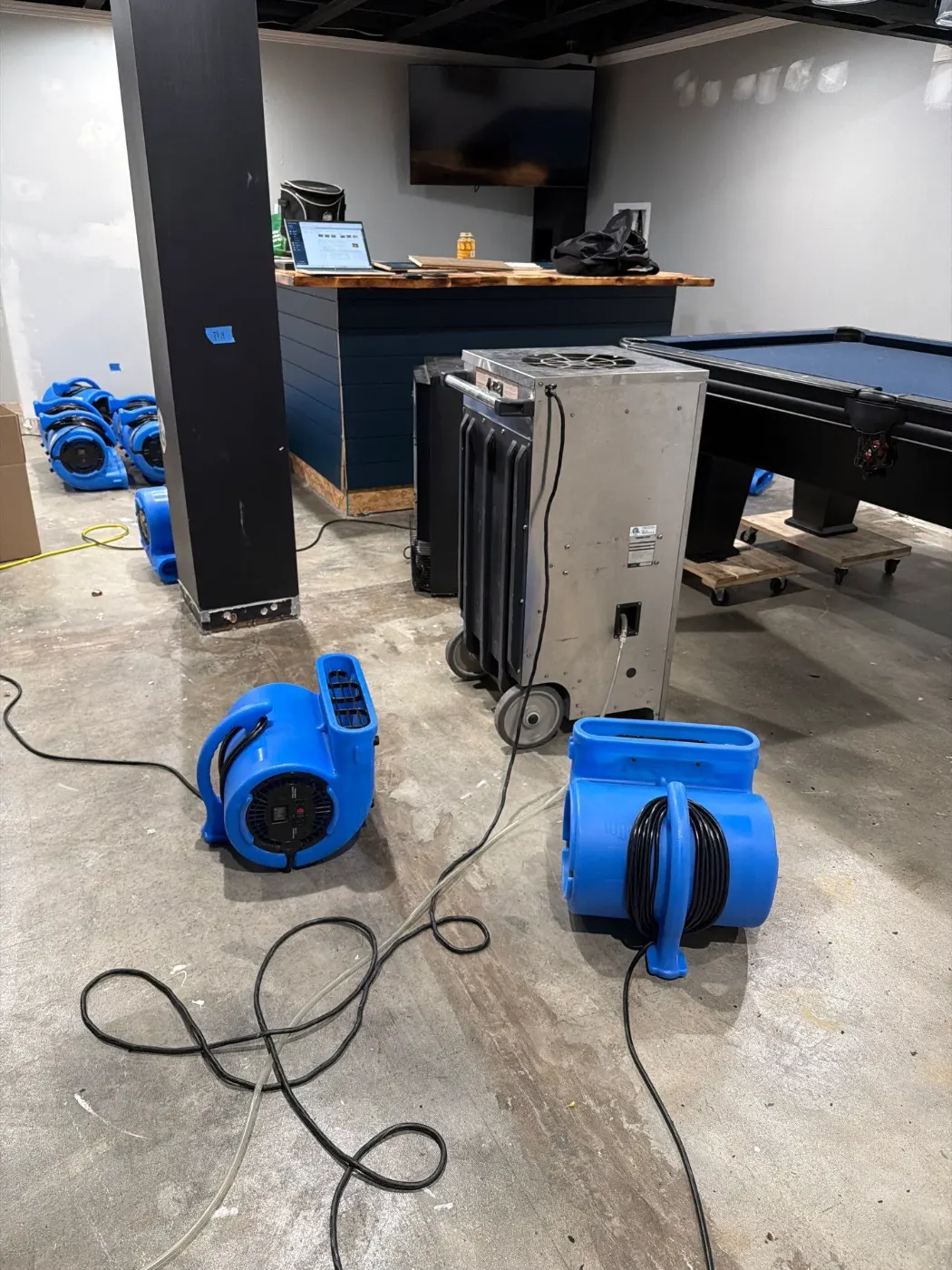
Commercial Storm Damage in Whiteland, IN
Commercial storm water intrusion in Whiteland stopped at the roof and dried to documented readings, with two hour dispatch.
Searching for Commercial Storm Damage near Whiteland? Whiteland Water Restoration dispatches 24/7, documents everything, and works with your insurance carrier from first call to final walkthrough. Call (463) 223-3831.
- Service: Commercial Storm Damage for Whiteland homeowners
- Service area: Whiteland, IN and surrounding areas
- Response time: Emergency water calls in Whiteland get crews rolling, not callbacks
- Licensed and insured (License #RC21100059)
- Serving Whiteland, IN since 2018
Commercial Storm Damage for Whiteland Businesses
Water that comes in around a rooftop unit lands over a ceiling grid or an electrical room, because that's where the curbs tend to sit. A storm that moves a curb flashing or tears a condensate line gives it the path. Whiteland Water Restoration dispatches to commercial intrusion calls in Whiteland within two hours, closes the path with a temporary dry in, and starts extraction under the affected area the same visit.
Commercial storm water work in Whiteland follows the IICRC S500, Fifth Edition, from 2021, and the IICRC S520 applies if wet insulation or gypsum has started growing mold. Whiteland Water Restoration logs temperature, humidity and material moisture daily against a dry standard from an unaffected part of your building, so the drying progress is on paper. The company's water restoration manager is IICRC certified.
Contents at your Whiteland property move ahead of extraction. Stock sitting on a wet floor gets lifted onto blocking or carried to dry ground, starting with whatever absorbs water fastest, such as cardboard and paper. Equipment that can't be moved gets wrapped in plastic. Whiteland Water Restoration lists what moved and where it went, which gives each tenant a record to attach to its own claim.
A one page summary at the front of the file helps a reviewer with a stack of claims to read. Whiteland Water Restoration puts the dates, the areas affected, the equipment days and the final readings on that page, with the detailed logs behind it. The summary for your Whiteland building is written from the daily records as the job closes.
Call Whiteland Water Restoration and get a crew dispatched to your Whiteland, IN building within two hours. Extraction, structural drying and the emergency dry in run as one job, which keeps the drying equipment from fighting a live leak. Ask about after hours scheduling for tenant spaces that can't close during the day.
Signs You Need Commercial Storm Damage Restoration
If you notice any of these in your Whiteland building, schedule a free inspection before the issue worsens.
Paint blistering or wall covering bubbling on a wall that backs up to the exterior
Breakers tripping in a mechanical room or electrical room that sits under a roof penetration
Water dripping from a light fixture, an air diffuser, or a sprinkler escutcheon after a hard rain
Window sills or curtain wall mullions holding water on the inside face after wind driven rain
Floor drains or cleanouts that gurgle or push water up during a heavy rain
Cardboard cartons on the bottom pallet positions that have darkened and gone soft
Leak sensors or pit alarms going off in a mechanical room or IT closet during a storm
Vinyl cove base curling or pulling away from the wall along an exterior wall
Raised access floor panels that feel damp, with water showing beneath them in a telecom room
Interior glazing sealant that's cracked, pulled loose, or missing along a run of joints
How Whiteland Water Restoration Handles Commercial Storm Damage
We follow these steps in order on every Whiteland job.
Moisture Mapping
Every affected space gets walked with thermal imaging and both penetrating and nonpenetrating meters. Readings are keyed to a floor plan by room or column line, so the scope covers where the water went and leaves dry areas alone.
Occupied Space Planning
Suites and corridors that must stay in service get marked on the plan before any equipment is staged, along with where the barriers go. The loud work is scheduled for hours when the space is empty.
Cavity Inspection Openings
Where meters or thermal imaging point to hidden water, the crew opens a small inspection hole or lifts a tile. What the probe finds inside decides how much larger the cut needs to be.
Midpoint Scope Review
Partway through the job, the crew compares the readings with the projected equipment period and tells the property manager if the schedule or the scope has moved. Added removal is photographed and explained before the work starts.
Closeout File and Walkthrough
A walkthrough with the property manager closes the job, and the crew hands over one organized file with the photos, the readings, the equipment run hours and the scope. Ownership and the carrier's reviewer can read it start to finish.
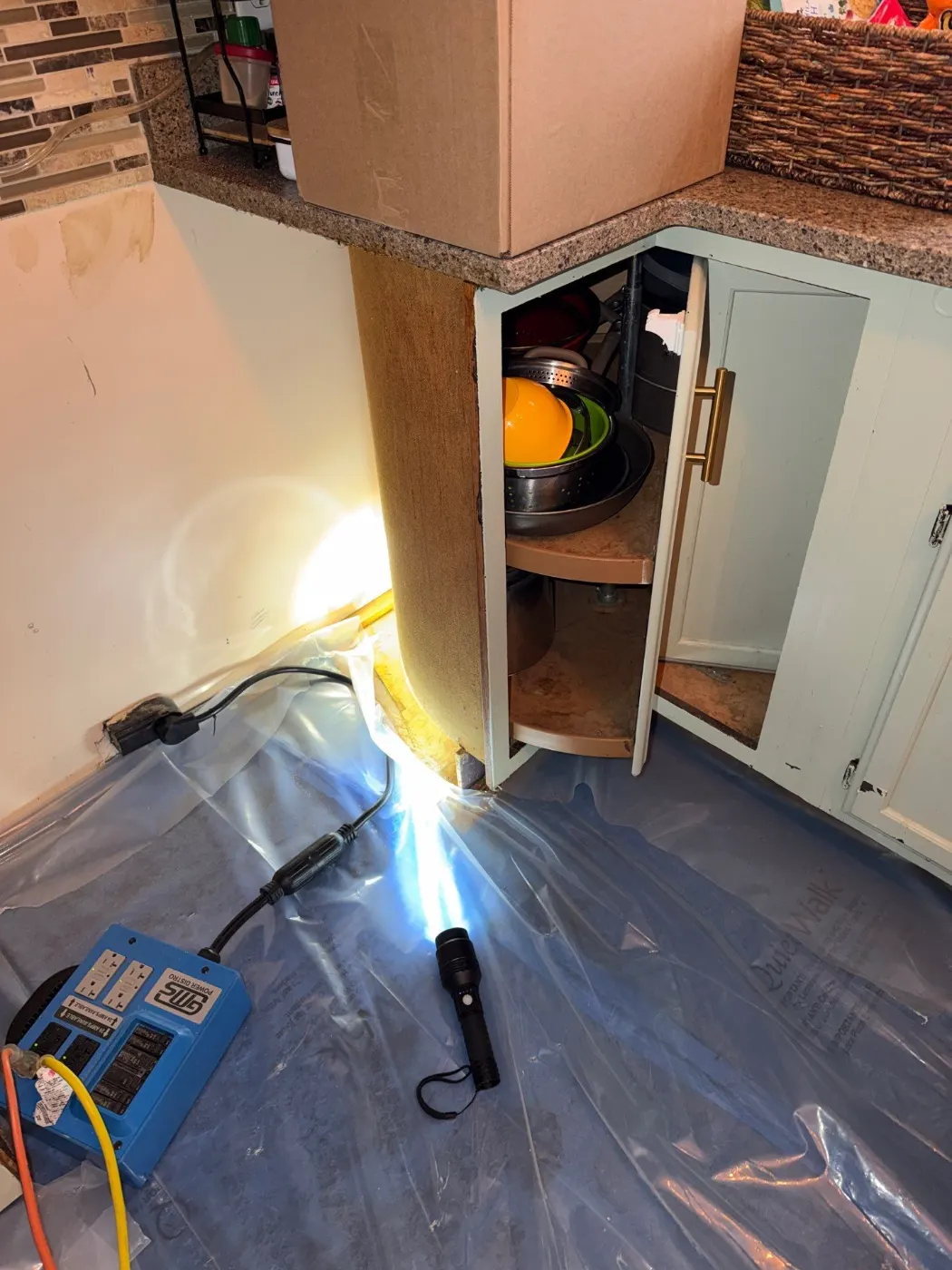
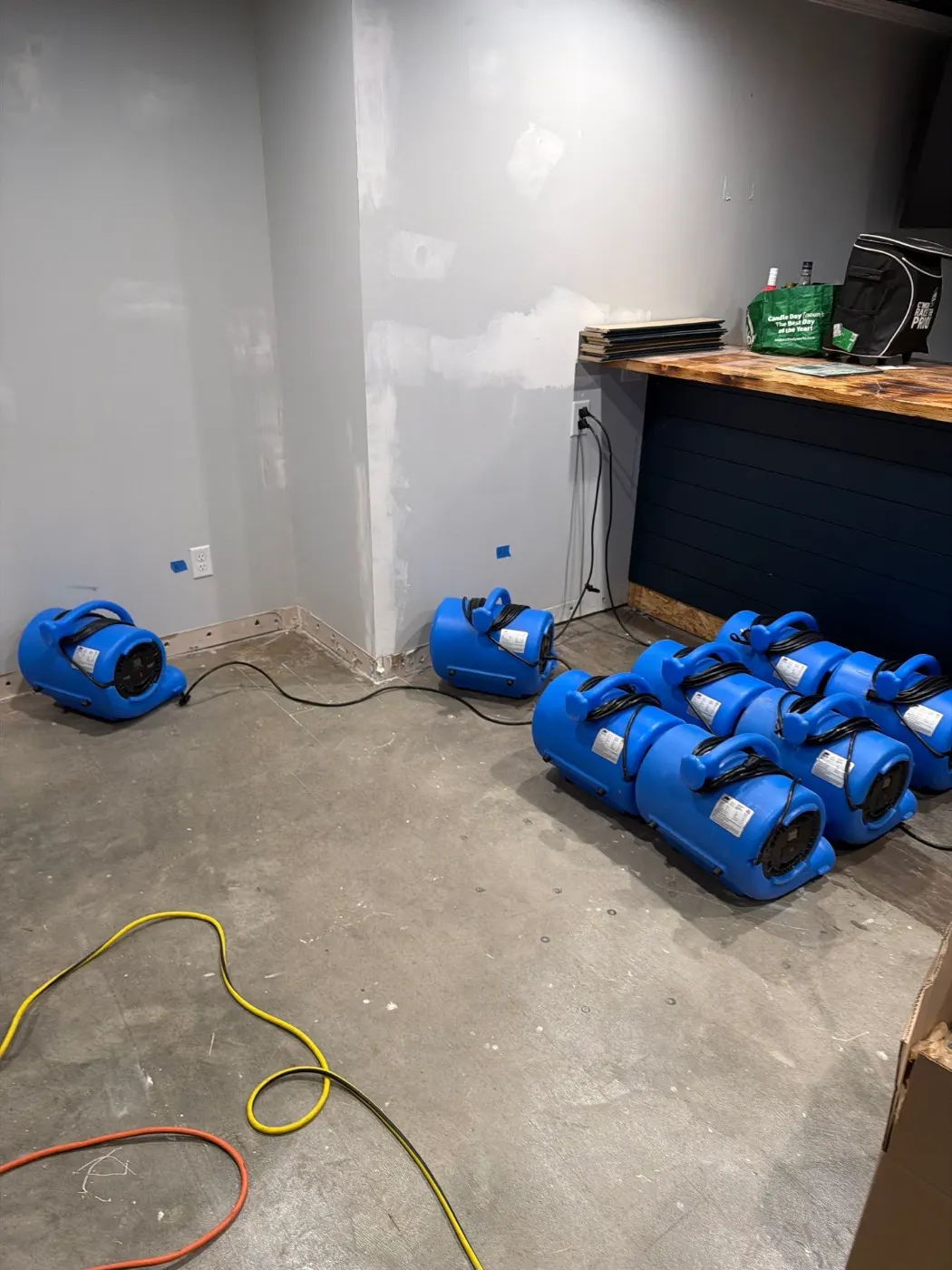
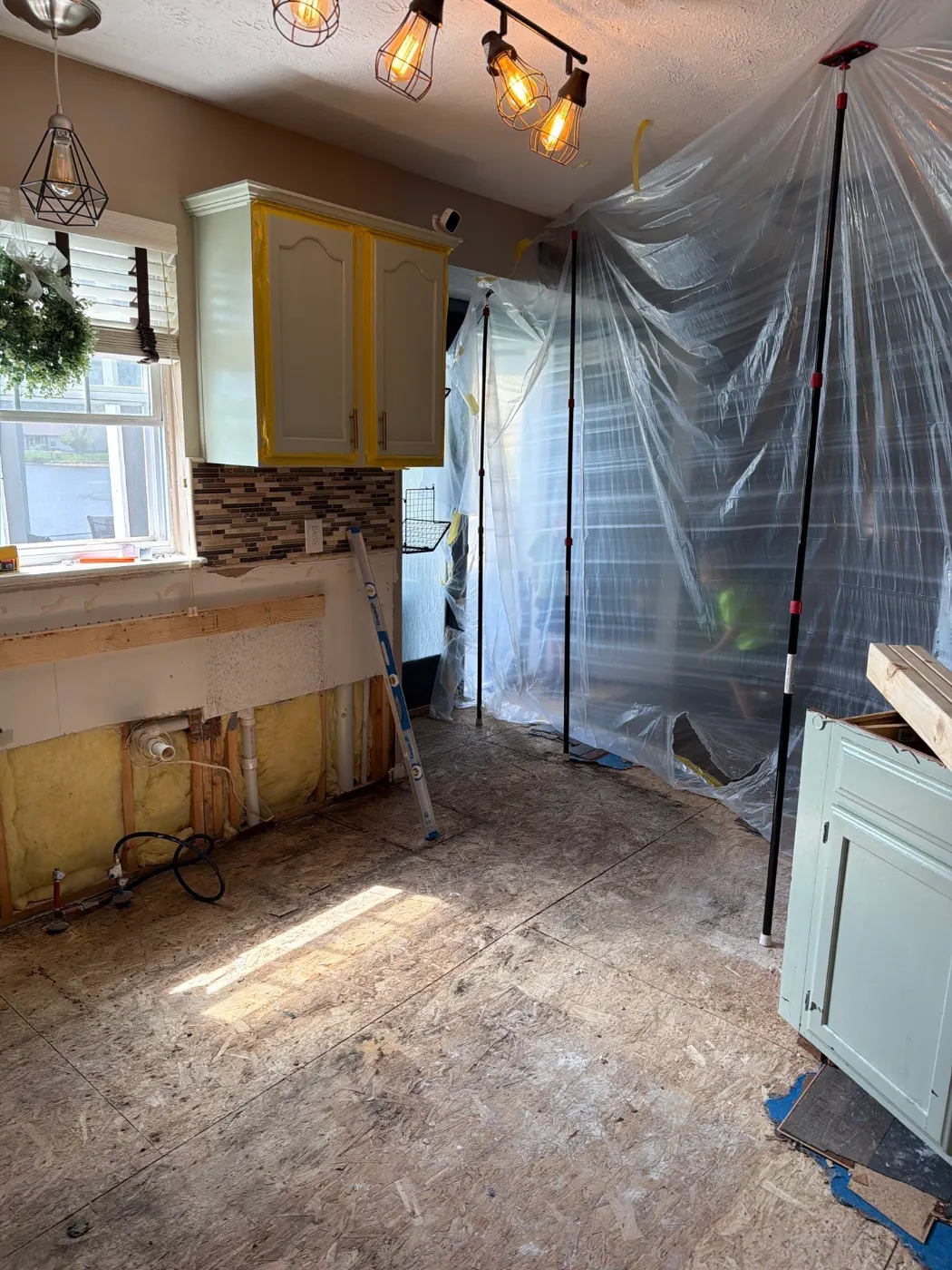
Commercial Storm Damage in Whiteland
Photographs from real commercial storm damage jobs completed by our crew in Whiteland and surrounding areas.
Commercial Storm Damage FAQ
Questions Whiteland property managers ask us about commercial storm damage restoration.
Guidance and Standards for Commercial Storm Damage
- The National Weather Service office in Indianapolis posts summaries of recent central Indiana storm and flood events. NWS Indianapolis Event Summaries
- The ANSI/IICRC S500 is the published standard for professional water damage restoration. The current edition is the Fifth Edition, 2021. IICRC S500 Standard
Whiteland Neighborhoods We Serve
We take commercial storm damage calls in every part of Whiteland. Pick your neighborhood for local details.
Other Restoration Services in Whiteland
Whiteland Water Restoration handles the full scope of restoration work. Explore our other services below.
Water Damage Restoration in Whiteland
24/7 emergency response. IICRC certified water restoration from extraction to full dry out.
Learn more →Basement Flooding in Whiteland
Basement water emergencies handled fast. Extraction, drying, mold prevention.
Learn more →Sewage Cleanup in Whiteland
Category 3 biohazard cleanup. Full containment, decontamination, structural restoration.
Learn more →Request Commercial Storm Damage Restoration
Reach Us Directly
Our team is available 24/7 for emergencies and ready to schedule inspections during business hours.
Need Immediate Help?
For active water or mold emergencies, call us directly. We are available 24/7.